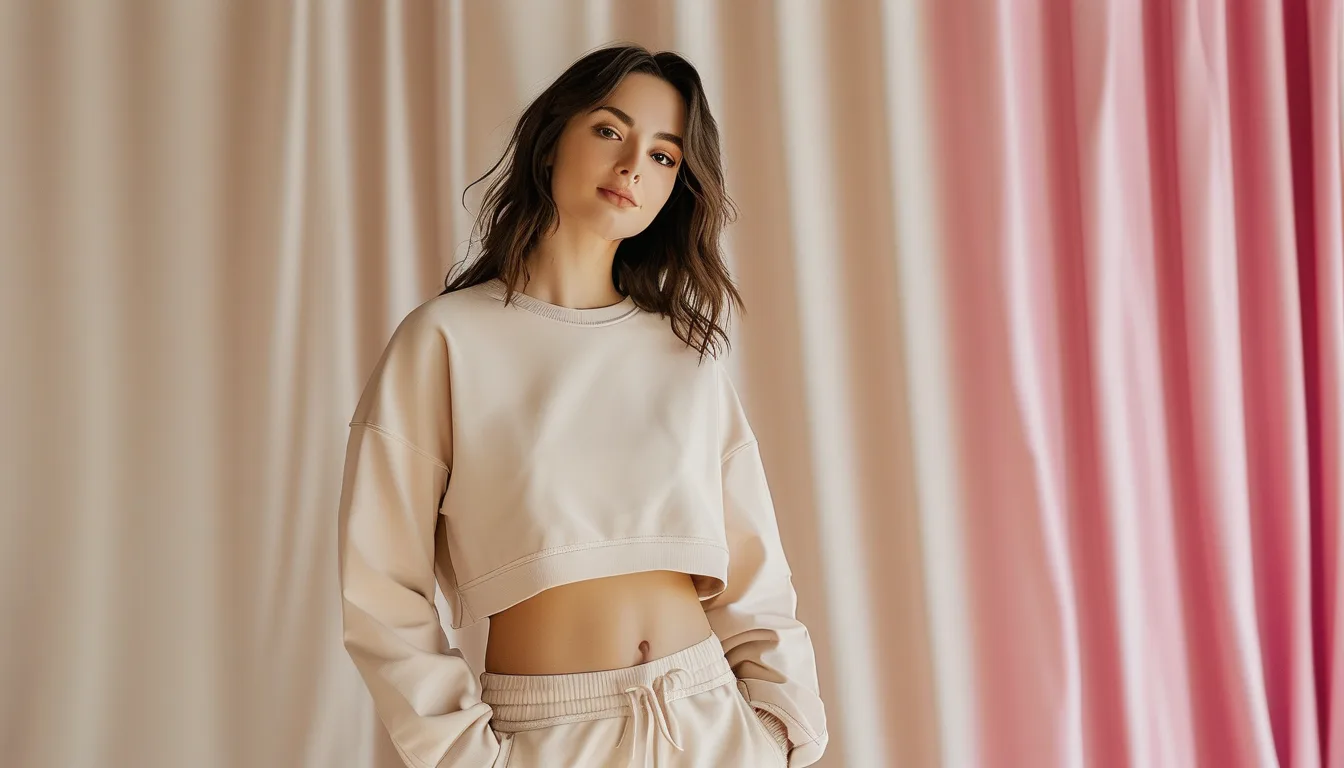
Full-Length Leggings in Summer Heat: The Fabric Rules That Make It Work
Quick Answer: Full-length leggings work in real heat when the fabric does four things: weighs in light (thin-gauge knits, roughly the 180-to-240gsm range rather than winter’s 280-plus), wicks fast (polyester or nylon blends move sweat; cotton holds it), allows airflow (mesh zones, perforation, or open-knit structure), and fits with a hair of ease instead of maximum compression. Color and construction finish the job — lighter shades and heat-reflective darks, flat minimal seams, a waistband that does not double-layer your warmest zone. The capri was never the only summer option; it was the default before summer-weight full-length fabric got good.
The whole point of leaving capris behind was the unbroken line — the leg that reads longer, the hem that meets a sneaker properly, the outfit that works. The good news for August: heat management in leggings is about 80 percent fabric choice and 20 percent styling, and both are learnable in one read.

Why do some leggings cook you while others don’t?
Because “leggings” spans a fabric range as wide as bare-arm to parka — and the label rarely announces where a pair sits.
Weight is the first variable. Legging knits run from featherweight summer gauges to brushed winter fleece. The winter end — thick, brushed-interior, compression-heavy — is a personal sauna in July regardless of what it is made of. The summer end feels like wearing shade. Most closets contain both and most people cannot tell which is which until mile two; the hand test below fixes that.
Fiber behavior is the second. Sweat cooling works by evaporation, and fibers either help or hoard: polyester and nylon absorb almost nothing and move moisture outward to evaporate; cotton drinks it — heavy, clinging, wet-for-hours cotton leggings are the specific garment behind most “I can’t wear leggings in summer” convictions. The synthetic-with-spandex family (with elastane held modest) is the summer answer.
Structure is the third, and the sneaky one. Airflow needs somewhere to happen: laser perforation, mesh panels behind knees and at calves, or open-gauge knit builds ventilation into a full-length silhouette. A dense smooth knit of identical weight runs noticeably warmer than a structured one.
And compression is the multiplier: maximum-compression fabric hugs skin so completely that air never moves underneath. Summer wants the relaxed end of the fit spectrum — the buttery-soft leggings genre’s lighter gauges, second-skin without the squeeze — saving serious compression for training that needs it.
How do you identify a summer pair — in a store or your own drawer?
Four tests, no lab required.
The light test. Hold the leg up to a window: a summer-weight knit glows translucent at single-layer (relax — worn on a body it is doubled over curves and opaque if the fabric is good); a winter knit blocks light entirely. Anything that reads blackout-curtain is a September-onward pair.
The hand test. Crumple a handful and release. Summer fabric is cool to first touch, slick-dry rather than plush, and springs back light; brushed interiors, flannel softness, and heft in the palm are winter’s signature. If it feels cozy in the store’s AC, it will feel like a decision by the mailbox.
The breath test for airflow. Stretch a single layer over your mouth and exhale: structured and open knits pass air noticeably; dense compression weaves pass almost none. This one test predicts the standing-at-the-farmers-market experience better than any product page.
The label sanity check. Favor nylon- or polyester-majority blends with spandex in the mid-teens or below; treat cotton-majority as loungewear-in-AC only. Marketing words that usually mean summer: lightweight, airflow, ventilated, quick-dry, cooling. Words that mean winter regardless of the season they are sold in: brushed, fleece-lined, thermal, sculpting, extra-compressive.
Run the drawer through the four tests once and sort the survivors forward for the next six weeks — most people discover they own two genuinely hot-weather pairs and have been rotating five by color alone, which explains a lot of Augusts.
What styling choices keep full length cool — without giving up the line?
The heat leaves through the top half and the details; the leg line stays.
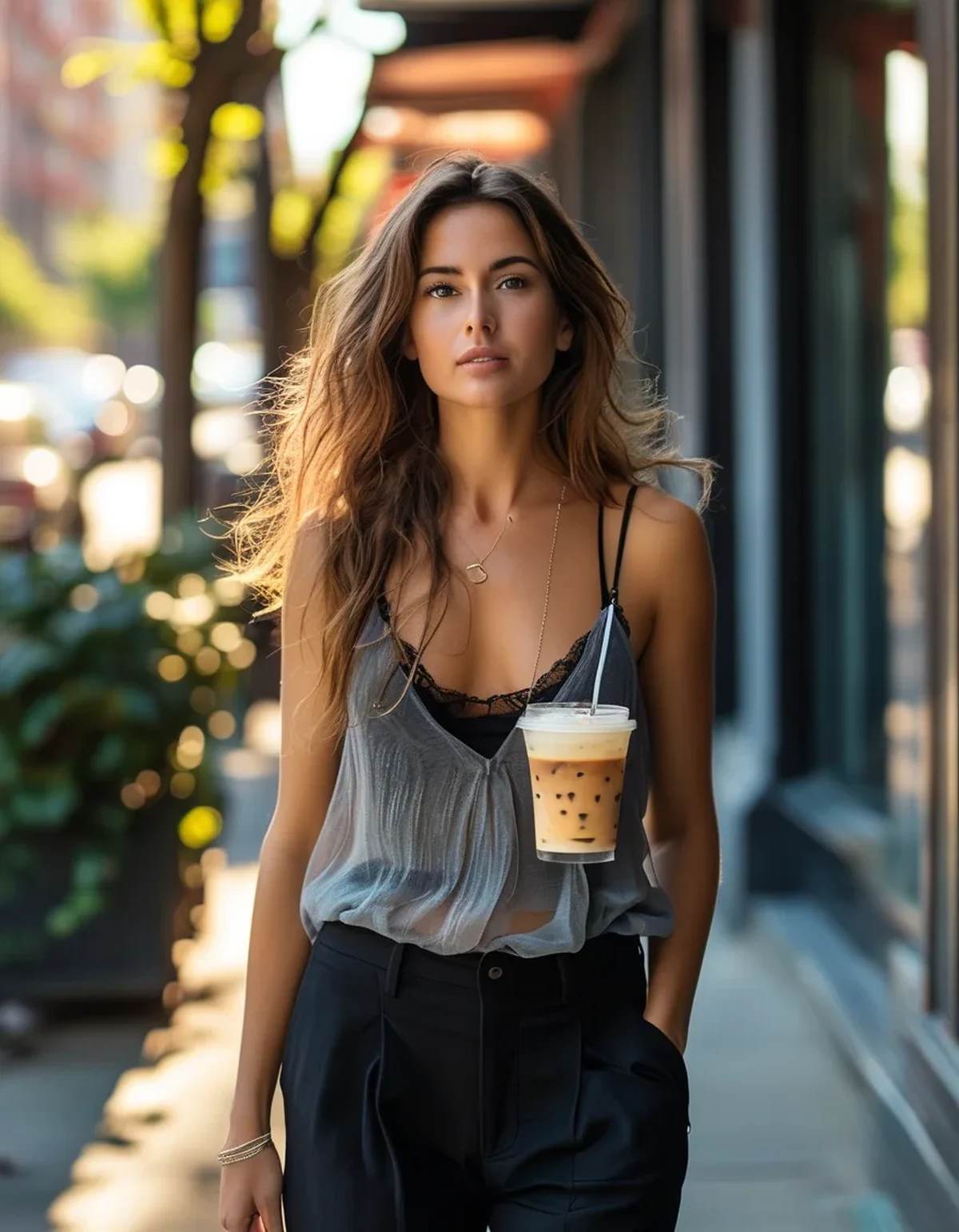
Balance the coverage budget. Full length below means airflow above: a boxy cropped tank, a loose muscle tee, an open-weave knit, or a breezy button-up over a bra top. The flowing-top-over-fitted-leg formula is simultaneously the coolest-running and most flattering summer proportion — the unbroken leg line does its work while heat exits through the billow. Head-to-toe fitted in August is the actual mistake the capri era was trying to solve.
Spend the color decision deliberately. Lighter shades — oat, sage, dusty blue, soft gray — absorb meaningfully less solar heat on sunlit walks; if the wardrobe leans black (whose does not), keep black for shade, evening, and AC days, and note that some technical darks are printed on heat-reflective bases that split the difference. Mid-tones show sweat most; darks and true lights keep counsel.
Mind the waistband math. The wide double-layer high waistband is four layers of fabric wrapped around your body’s thermal core. Summer versions with single-layer or shallower bands run cooler; so does letting the top float over the band instead of tucking into it.
And the hem still wins the style argument — full length meeting a low sneaker or slide keeps the column that cropped lengths interrupt; a slight scrunch at the ankle reads intentional in summer where a bootcut leggings silhouette reads seasonless. Wide-hem flare versions in featherweight knits are the breeziest full-length option of all: airflow up the leg, line fully intact — the summer loophole hiding in plain sight.
What Nobody Tells You About Leggings in Real Heat
Sweat-through anxiety is mostly misplaced — dark and light technical knits hide moisture well, and the wick-and-evaporate cycle on a true summer fabric clears faster than the embarrassment window. The real August risks are different ones: chafe, where damp fabric plus repetition meets inner-seam placement (flat-seam or seam-free builds and a swipe of anti-chafe balm end it), and sunscreen staining, which yellows waistbands and light fabrics on contact — let sunscreen absorb fully before dressing, and wash sunscreen-exposed pairs promptly.
Sheer risk rises exactly when summer arrives: light-gauge fabric plus maximum stretch is the see-through equation, so the summer pairs deserve the squat test in daylight more than the winter ones — buy the right size rather than the smaller one, since a summer knit stretched to its limit is both sheerer and hotter (compressed fabric ventilates worse).
The AC paradox argues for full length all summer long, beyond style: the modern August day swings between 90-degree sidewalks and 66-degree offices, theaters, and grocery aisles, and full-length lightweight pairs handle both ends of that swing while shorts handle one. The commuter math quietly favors the leggings.
And washing discipline pays double in summer — sweat, sunscreen, and body oils degrade elastane fastest in exactly these months. Cold wash, hang dry, no softener keeps the summer pairs summer-weight; a dryer-cooked lightweight knit loses its recovery first at the knees, and a baggy knee defeats the whole unbroken-line project the season was meant to serve.
How do you build the six-week rotation from here into fall?
Three pairs run the whole late-summer bridge — and this is the exact month to acquire them well.
The heat specialist: lightest gauge you own, structured or perforated knit, in a light color — assigned to sunny errands, walks, travel days, and anything before 6pm outdoors. If the drawer audit found none, late-summer clearance is pricing this pair at its yearly low right now, while the racks still hold summer stock.
The all-rounder: mid-light weight, dark neutral, clean matte finish — the yoga pants of record for studio classes, AC days, evenings, and every outfit that needs to read slightly polished. This pair carries September almost alone.
The waiting-room pair: the brushed, warmer, compressive pairs the audit benched — stored one shelf back with intent, because their season opens in six-to-eight weeks and arrives suddenly. The first crisp morning flips the hierarchy overnight; the summer specialist then takes the back shelf until May.
Rotation notes that make three pairs feel like six: wash the heat specialist promptly after sweaty wears so it is always live; let tops carry the variety (the same dark all-rounder reads as five outfits under five different tops); and note which pair earned the most wears by Labor Day — that construction, weight, and brand is your documented summer formula, worth buying again next spring at full choice rather than next August at whatever is left.
The capri drawer, meanwhile, owes you nothing. Retirement stands — the summer-weight full-length pair was the technology it was waiting for.
FAQ: Summer Leggings Questions, Answered
Are leggings actually hotter than loose pants in summer?
Depends entirely on the fabrics compared: lightweight wicking leggings run cooler than heavy denim or thick joggers, while linen trousers beat everything on pure airflow. Where leggings win is the whole-day event: activity, AC swings, and no-iron polish in one garment. The fair summary — a summer-gauge legging is competitive with most summer pants and beats every non-summer legging by a mile.
What about biker shorts as the summer compromise?
A legitimate tool with a different job: shorts win pure-heat workouts and lounging, while full length wins the AC swing, sun protection on long outdoor stretches, evening polish, and the leg-line brief that started this whole niche. Owning both and assigning by day beats a philosophical position on either.
Do cooling or UPF leggings actually do anything?
UPF ratings are real and useful — a rated pair is legitimate sun protection for long outdoor hours, one of full-length’s honest summer advantages. Cooling claims vary: mineral-infused and heat-reflective technologies produce modest measurable effects, while much of the felt difference is simply light gauge plus good wicking. Buy the fabric first and treat the technology as a bonus, not the reason.
My leggings smell after one summer wear even when washed — fixable?
Classic synthetic-plus-sweat buildup: body oils lodge in the fibers and reactivate with heat. Fixes in order — wash promptly rather than letting damp pairs sit in the hamper, skip fabric softener entirely (it seals the residue in), use a sport-wash detergent occasionally, and run a white-vinegar rinse cycle for established cases. Elastane-safe, cheap, and it works on the whole activewear drawer.
TL;DR:
- Heat comfort in full-length is fabric math: light gauge, wicking synthetic blends, airflow structure, and relaxed-not-maximum compression.
- Audit the drawer with four tests — light, hand, breath, label — and promote the true summer pairs; most closets rotate winter fabric all August without knowing.
- Style the heat out through the top half (flowing over fitted), color strategy, shallow waistbands, and hems that keep the unbroken line the capri never offered.
- Run a three-pair system — heat specialist, dark all-rounder, benched winter pairs — bought at this month’s clearance prices and washed cold to protect the elastane.
Run the window test on every pair you own tonight; it takes five minutes and reorganizes the next six weeks. Full length in the heat was never the sacrifice — the wrong fabric was.
See It in Motion
Seen here: High Waist Embossed Yoga Leggings with Side Pockets — shop it on bubblelime.com
Keep Reading
This article is for general informational and styling purposes only. Fit, sizing, and product availability may vary.