How Hem Length Changes Where People Think Your Leg Ends
Quick Answer: Your eye reads leg length as ending where a continuous line of fabric or skin is interrupted. A hem ending at the narrowest point of the ankle preserves the line; a hem ending mid-calf cuts it at the widest point, visually shortening the leg. Ankle-length or full-length hems flatter nearly everyone; mid-calf is the least forgiving position on the entire leg.
Two pairs of leggings, identical in every respect except two inches of length.
One makes you look long and clean. The other, somehow, does not — and it is difficult to articulate why, since nothing about your actual leg changed.
The mechanism is straightforward and it applies to every garment you own, which makes it one of the more useful things to understand about how clothes work.
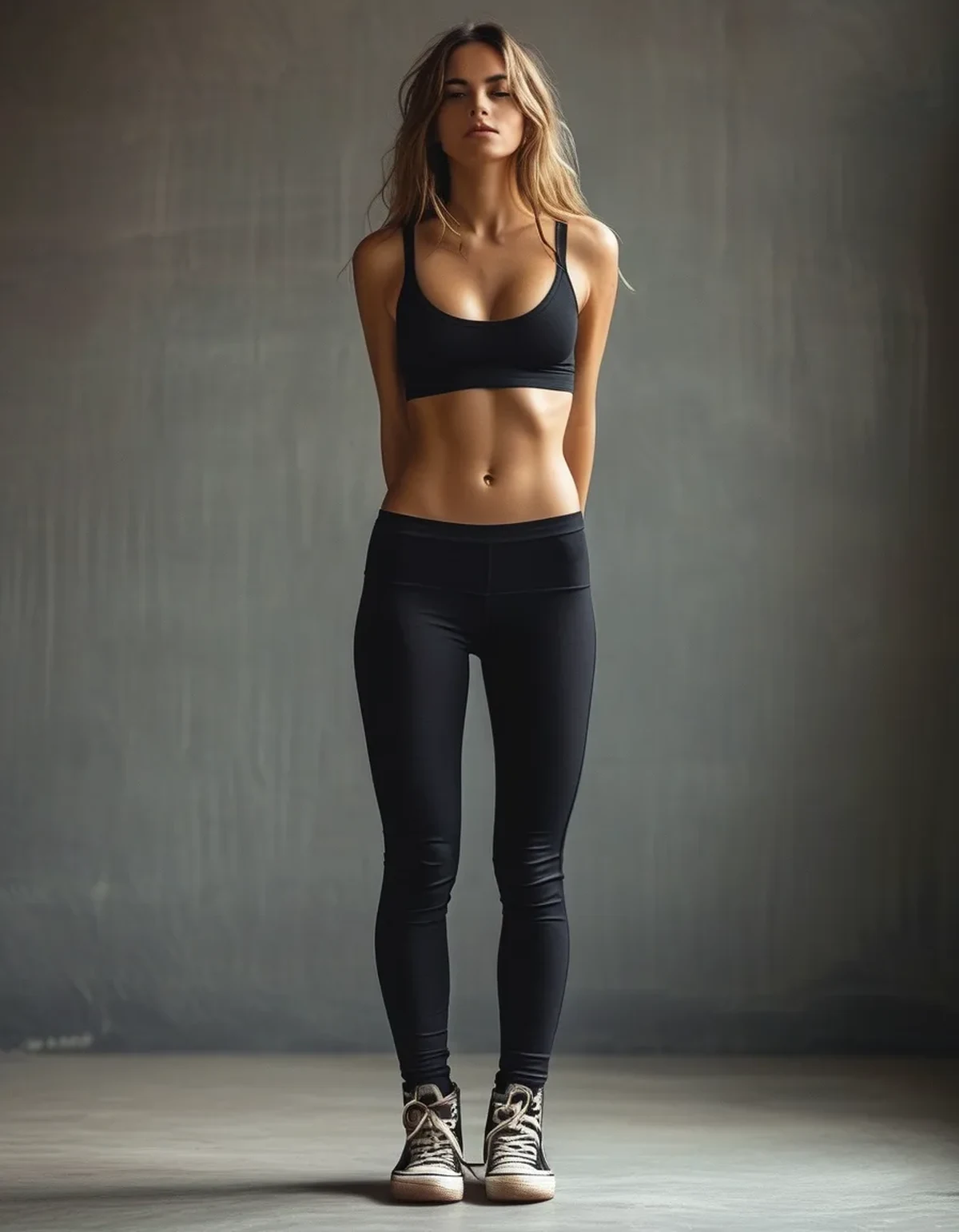
Why does the eye read a hem as an ending?
Because horizontal interruptions terminate a vertical line, and your visual system treats the termination point as the end of the shape.
A continuous vertical line reads as length. Any strong horizontal break stops it. A hem is a strong horizontal break — a change in color, texture, and edge, all at once.
The consequence: your perceived leg length is measured from the waist to the interruption, not to your actual foot. Whatever is below the hem reads as a separate element, not as a continuation.
This is why the hem position matters more than almost any other variable in a pair of pants. It is not about the pants. It is about where you have told the viewer your leg stops.
Two corollaries worth knowing:
- A hem that matches your shoe or skin tone weakens the break, which is why tonal shoes lengthen the line even at an unflattering hem.
- High contrast at the hem strengthens the break. Black leggings with white socks and white shoes creates the strongest possible interruption.
Why is mid-calf the worst possible place?
Because it interrupts the leg at its widest circumference.
Your calf’s widest point is roughly at its upper third. A hem there does two things at once: it stops the vertical line early, and it stops it at the point of greatest width, so the last thing the eye registers before the break is the leg’s broadest measurement.
The perceived result is a shorter, wider leg — from a garment that fit perfectly well.
Hem positions ranked from most to least flattering for most people:
- Full length, brushing the top of the foot. Longest possible uninterrupted line.
- Ankle length, at the narrowest point of the ankle. Nearly as good, and it shows the ankle, which reads as delicate by contrast with the calf.
- Just above the ankle bone. Still fine; the leg is still narrow there.
- Lower calf, below the widest point. Acceptable but not ideal.
- Mid-calf, at the widest point. The least forgiving position on the leg.
- Just below the knee. Also poor, for the same reason at a different joint.
The rule that covers all of it: end the hem at a narrow point, never a wide one. Ankle, or nothing.
Does this change with height?
The principle is universal; the specific measurements are not.
On a shorter frame, the total leg length is smaller, so any given break removes a larger proportion of it. This is why cropped styles read as more dramatically shortening on petite frames — the same two inches is a bigger fraction of the whole.
On a taller frame, there is more length to work with, so a slightly higher hem is more forgiving. This is also why tall people can wear cropped styles that look wrong on others — but the mid-calf rule still applies, because it is about width, not proportion.
The complication for tall women: many full-length styles are not actually full length on you, and end up landing at exactly the wrong place. A legging designed to hit the ankle on a 5’5” frame hits the mid-calf on a 5’10” one, which is why so many tall women feel like everything crops badly.
The practical response is the same in both directions: buy for where the hem lands on your body, not for what the label calls the length. Cropped, ankle, and full-length are relative terms defined by a fit model who is probably not your height.
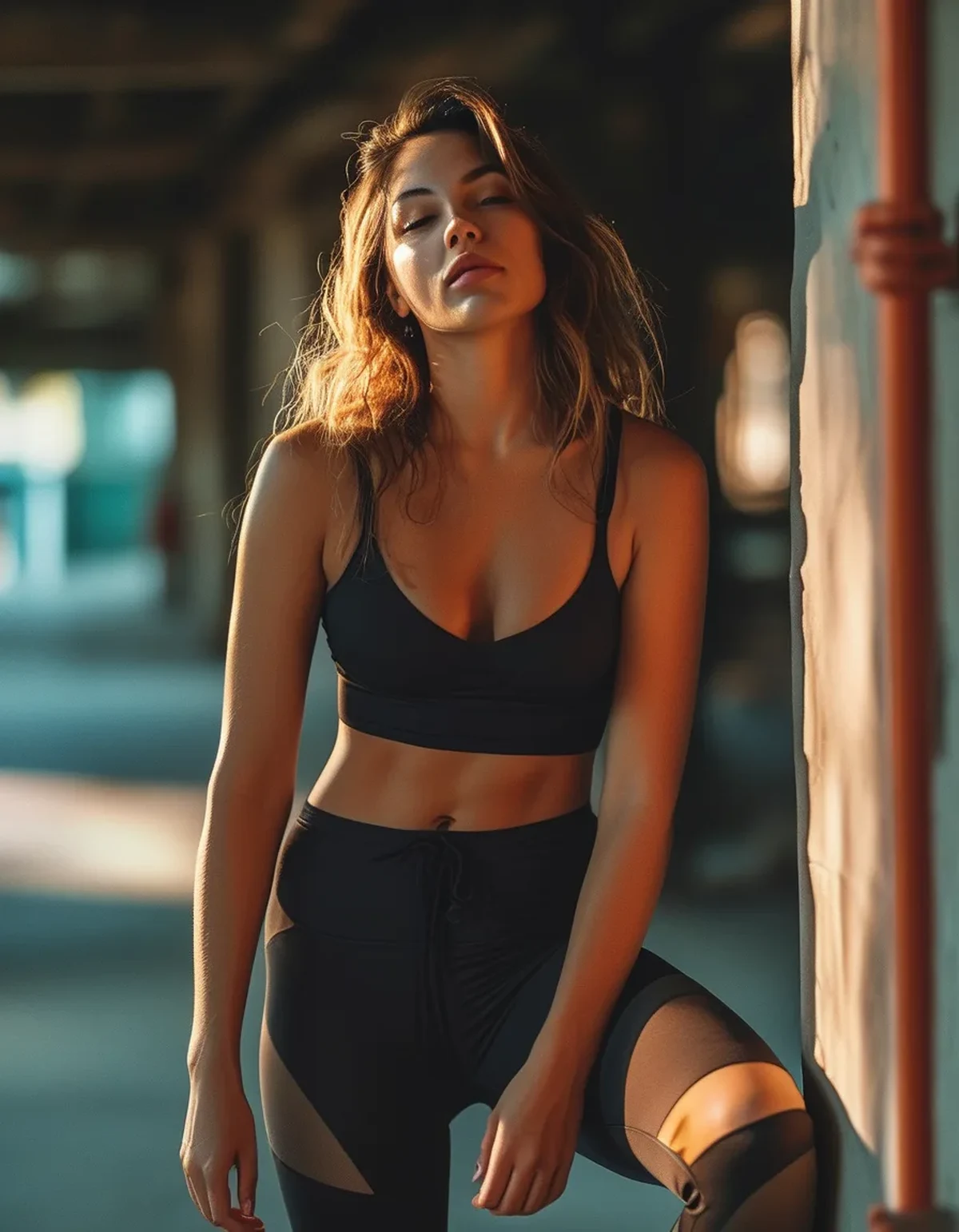
Myth vs Fact: Hem Length Edition
Myth: Cropped leggings are more flattering because they show the ankle. Fact: Showing the ankle is flattering. Cropped styles frequently do not show the ankle — they end above it, on the calf. Ankle-length shows the ankle. Those are different garments despite frequently sharing a label.
Myth: Long leggings make short legs look shorter. Fact: The opposite. An uninterrupted line to the foot maximizes perceived length regardless of actual height. This is one of the most persistent backwards pieces of styling advice in circulation.
Myth: You should match your hem to your shoe height. Fact: You should match your hem to your ankle’s narrow point. Shoe height changes where that point sits relative to the ground, but the anatomical target does not move.
Myth: Wide-leg pants follow different rules. Fact: Same rule, more forgiving execution. A wide leg obscures the calf’s width, so a mid-calf hem is less punishing — but a longer hem still reads as longer.
Myth: A cuff or rolled hem is a good solution. Fact: A cuff adds a second horizontal line and bulk at the break point, which strengthens the interruption. If you must shorten, a clean hem beats a roll every time.
How do you find your own correct hem?
Fifteen minutes with a mirror and a pair of scissors you do not use.
Step 1: Find your ankle’s narrow point. Stand and run your hand down your calf until you feel the narrowest circumference, usually just above the ankle bone. Measure from the floor. That number is your target hem height, and it is a fixed personal measurement you can shop with.
Step 2: Test it on something you own. Fold a pair of leggings up to that height and look in a full-length mirror. Then fold to two inches higher and compare. The difference is usually more obvious than people expect.
Step 3: Check it in shoes you actually wear. Sneakers, boots, and flats change the relationship between hem and ankle. A hem that is right in sneakers can be wrong in boots.
Step 4: Alter what you own. Hemming knit leggings is inexpensive at any tailor, and it converts a pair you never reach for into a pair you wear constantly. This is the cheapest wardrobe upgrade available and almost nobody does it with activewear.
Step 5: Shop by measurement. Look for stated inseam, compare it to your own, and stop trusting the words cropped, ankle, or full-length.
One extra note for the transitional season: as the weather cools and you move toward boots and longer socks, your ideal hem shifts slightly longer. A hem that was perfect with low sneakers in July often sits awkwardly above a boot shaft in October.
FAQ: Hem Length Questions, Answered
What about 7/8 length — is that the same as ankle length?
Usually not. 7/8 typically means seven-eighths of a full inseam, which lands above the ankle bone on most people and on the lower calf for taller frames. Check the stated inseam rather than the fraction.
Do these rules apply to skirts and dresses too?
Exactly the same principle. The most flattering skirt hems land at narrow points — above the knee, or at the narrowest part of the calf, or at the ankle. Mid-calf is the hardest length for the same reason.
What if I have a longer calf muscle that sits lower?
Then your narrow point sits lower too, and your ideal hem is longer than average. This is precisely why the measurement approach beats any general rule — find your own narrow point and shop to that number.
TL;DR:
- The eye reads your leg as ending where the fabric stops, not where your foot is.
- Mid-calf is the worst hem position because it breaks the line at the widest point.
- End the hem at a narrow point — ankle or full length — and the line stays intact.
- Cropped, ankle, and full-length are relative labels. Shop by inseam measurement.
- Hemming leggings costs very little and rescues pairs you never wear.
Measure your ankle’s narrow point once and you have a number you will use for years, across every category of clothing you own. It is a rare piece of styling advice that turns entirely on a single measurement.
See It in Motion
Seen here: Super High Waist Embossed Yoga Leggings with Inner Pocket — shop it on bubblelime.com
Keep Reading
This article is for general informational and styling purposes only. Fit, sizing, and product availability may vary.
