Why Full-Length Leggings Turn Into Capris Halfway Through a Workout
Quick Answer: Leggings ride up when the waistband cannot hold position against the fabric’s downward drag, so the whole garment climbs from the ankle instead. The main causes are a waistband without silicone or a wide enough band, low-recovery fabric that stretches and does not return, and a rise that sits below your natural waist. Length is almost never the actual problem.
You checked the length. You bought the tall. They still end mid-calf by the second set.
The hem is moving because the top is not staying put.
Why do leggings ride up from the ankle?
Because the fabric has to come from somewhere.
Leggings are one continuous tube under tension. When the waistband slips downward, the fabric does not go slack at the top — it redistributes, and the ankle is where the slack gets taken up.
Movement drives the migration. Every squat, lunge, and step stretches the fabric across the knee and hip, and the fabric returns unevenly. Repeated cycles gradually pull the hem upward, which is why the problem worsens through a session rather than appearing at the start.
Sweat and heat make it worse. Warm, damp fabric loses tension and slides against skin more readily. This is why the problem is minor on a walk and severe in a hot class.
Low-recovery fabric never fully returns. Some fabrics stretch and come back; others stretch and stay stretched until washed. The second kind climbs continuously.
And a rise sitting below the natural waist has no anchor. The narrowest point of your torso is what holds a waistband in place. Below that point, the band is sitting on a slope and gravity does the rest.
What features actually stop it?
Four, and you can check all of them before buying.
A silicone gripper strip inside the waistband. This is the single most effective feature and it is genuinely uncommon in leggings — it is standard in cycling shorts, where riding up has always been treated as a real problem.
A wide waistband, at least four inches. Wider bands distribute holding force over more surface area and are far less prone to rolling. A narrow band is essentially a single point of contact.
High rise, above the navel. This puts the band at your natural waist, where your body is narrowest and provides a shelf for it to sit on.
High-recovery fabric. Look for a higher elastane or spandex percentage — roughly 18 to 25% — and check that the fabric snaps back when you stretch it in the store rather than staying deformed.
A note on compression: genuinely compressive leggings ride up less because the fabric grips the leg along its whole length rather than hanging from the waist. Loose ‘buttery soft’ fabrics are more comfortable standing still and worse in motion — a real trade-off, not a quality difference.

Myth vs Fact: Leggings Riding Up
Myth: Sizing down stops leggings riding up. Fact: A smaller size increases tension throughout the garment, which increases the force pulling the hem upward and makes the waistband more likely to roll. Sizing down often makes the problem worse while adding a waistband dig.
Myth: Buying tall lengths solves it. Fact: More length gives you more room to lose, so tall leggings that ride up end at the same place — you just paid for extra fabric that is now bunched at your knee. If they ride up, the waistband is the issue.
Myth: Expensive leggings do not ride up. Fact: Price correlates with fabric feel and finishing, not necessarily with grip features. Plenty of premium leggings omit the silicone band because it is less comfortable against skin, while inexpensive compression leggings include it — this is the fact that most surprises people who have upgraded and seen no change.
Myth: It is a body shape problem. Fact: It is a rise-and-anchor problem. A waistband above the narrowest point of your torso stays put on essentially any shape; below it, nothing does.
Myth: They will stop riding up once they are broken in. Fact: Fabrics lose recovery with wear, not gain it. If a pair rides up when new, it will ride up more at six months.
What can you do with the pairs you already own?
Four fixes, none of which involve buying new leggings.
Wear them with a fitted top tucked in, or a bodysuit. A layer over the waistband adds friction and holds the band in place. This works better than it sounds and costs nothing.
Wash them properly and stop using fabric softener. Softener coats elastane fibers and reduces recovery permanently. Cold wash, no softener, no dryer. Heat is what kills the stretch fiber, and a single hot dryer cycle can cost a pair much of its recovery.
Add a wide band or shorts over the top for class. Cycling shorts or a wide waistband over leggings solves the anchor problem directly.
Demote the offenders. Leggings without grip features are fine for walking, errands, and travel — they fail specifically under repeated deep hip flexion. Match the pair to the activity rather than fighting it.
Fall note: as you move into layered training clothes, a longer top over the waistband becomes both warmer and more practical, which is why this problem quietly diminishes in autumn. It is a good season to test whether a pair is genuinely bad or was just being worn without an anchoring layer.
FAQ: Legging Length Questions, Answered
How do I test for ride-up before buying?
In the fitting room, do ten bodyweight squats and a few walking lunges — not two, ten. Ride-up is cumulative, so a couple of movements will not reveal it. Then check where the hem sits. If it has moved noticeably in ten reps, it will be at your calf in an hour.
Does the seam construction matter?
Yes, somewhat. Flatlock seams and gusseted crotches reduce the fabric bunching that contributes to migration, and a gusset in particular allows deeper hip flexion without dragging the whole garment upward. It is a secondary factor compared with the waistband, but it is a genuine one.
Are ankle-cuffed or stirrup leggings a real solution?
Stirrups genuinely solve it by anchoring at the foot, which is why they persist in dance and ski wear. Elasticated ankle cuffs help less than they appear to — they hold the hem at the ankle while the fabric bunches above it, trading the length problem for a bunching one. Worth trying, but not the universal fix they look like.
TL;DR:
- Ride-up starts at the waistband; the hem climbs because the fabric redistributes when the band slips.
- Look for a silicone gripper, a four-inch-plus band, a rise above the navel, and high-recovery fabric.
- Sizing down and buying tall both make it worse rather than better.
- Skip fabric softener and the dryer — heat and coating destroy the recovery that holds everything in place. Do ten squats in the fitting room before you buy. It is the only test that reliably predicts what will happen an hour into a class, and it takes twenty seconds.
See It in Motion
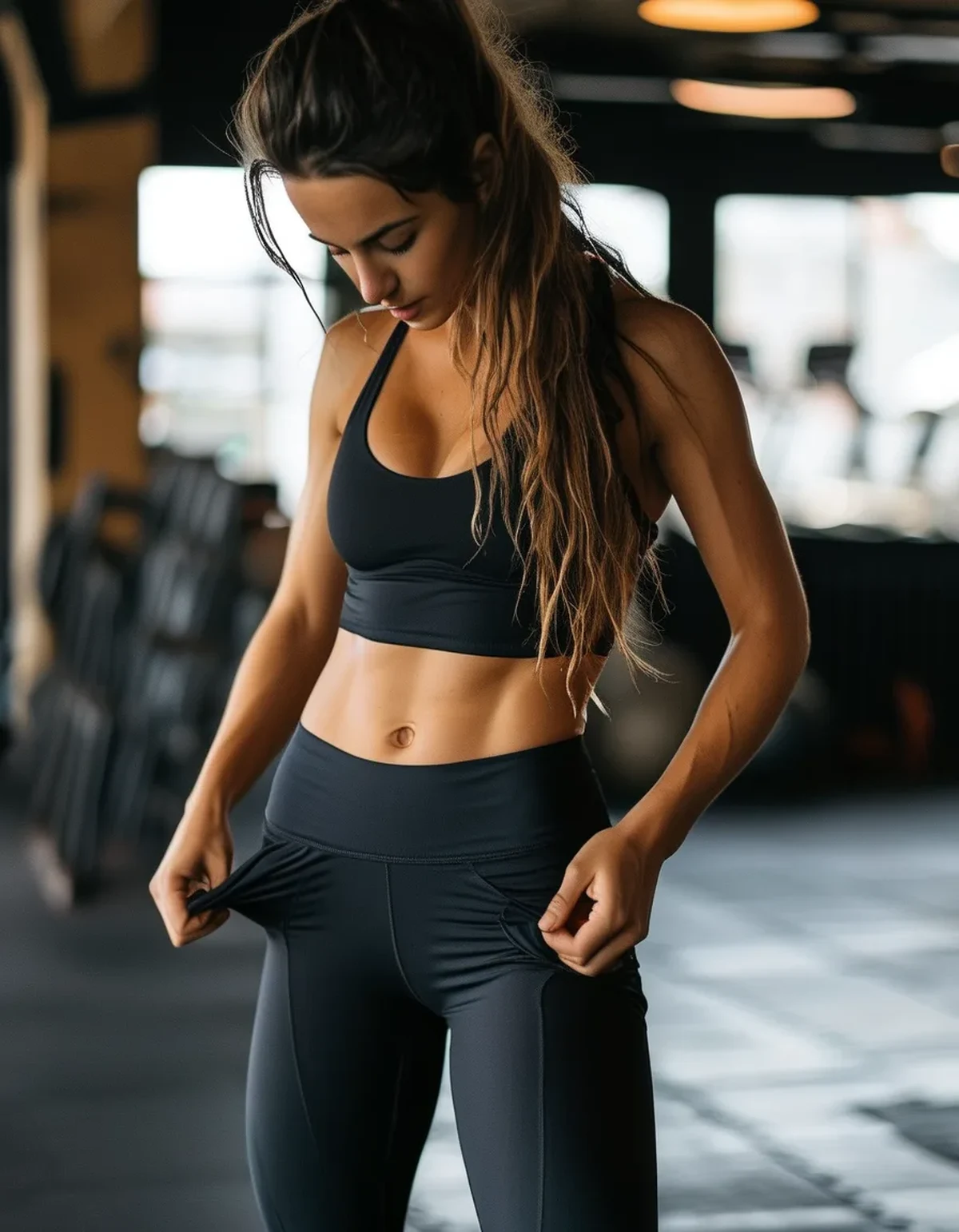
Seen here: High Waist 8” Yoga Shorts — shop similar styles on bubblelime.com
Keep Reading
This article is for general informational and styling purposes only. Fit, sizing, and product availability may vary.
